
|
|
|
(These entries are part of hiptop Nation, a communal weblog for anyone in the world using a Hiptop device) |
more mlee: |
| posted by mlee at tmail ° com more from this user ° all posts « OLDEST « PREVIOUS | NEXT » NEWEST » |
| Hands-on RFID Tue 03.16.04 5:34pm PST #8533 |
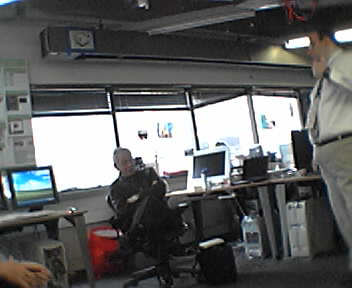 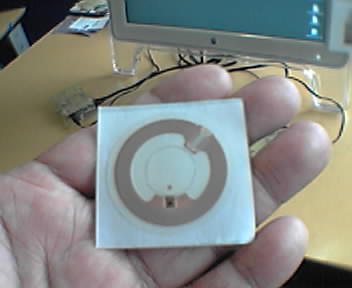 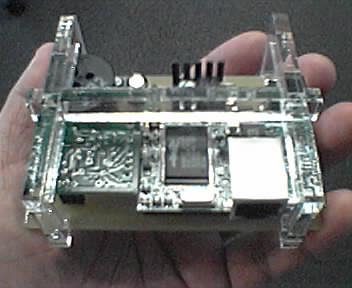 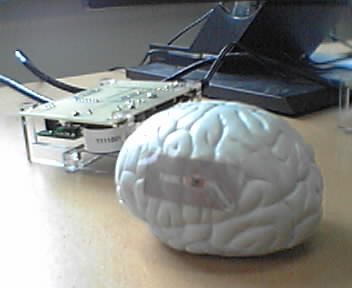 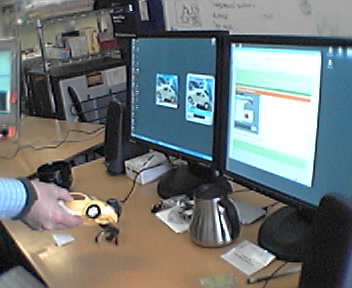 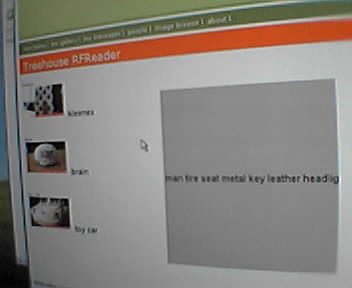 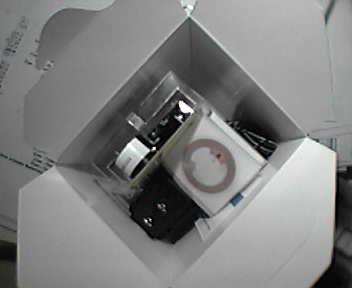 MIT research scientist Henry Holtzman, working with the boys in the Physical Language Workshop, gave a hands-on workshop on RFID or Radio Frequency IDentification technology this morning (pic 1). RFID uses stickers/tags (pic 2) with unique ID numbers stored in a chip with an antenna through which external readers can retrieve the ID. These tags cost about a dollar each, and less in large quantities. Walmart is gearing up to use 8 billion of these tags a year to track shipping palettes and individual boxes of product. The FDA wants to tag every drug bottle to control theft and counterfitting. Henry and the boys custom built a low-cost reader device (pic 3) to use in experiments in the lab. The reader consists of about $125 worth of mostly off-the-shelf parts that can read an ID from a tag at close range, beep to confirm, and transmit the data via an ethernet connection to a web server port. In the hands-on session, we picked a toy from a box--mine was a foam rubber brain--to affix a tag (pic 4). At the first workstation, we photographed our object with a web cam which posted the resulting image to the Treehouse collaboration system which has a photo image manager (pic 5). We typed in a name for our image. In another interface, we opened our image and waved the tagged object over the reader to assign the unique ID to the named image. At the last station (pic 6), you could wave the tagged objects over one to three readers to have the photos retrieved. The names of the photos were then sent as queries to ConceptNet, a database of over 680,000 common sense facts about everyday life, which returned a statement. The words "kleenex," "brain," and "toy car" returned: "Man tire seat metal key leather heading." OK, well the idea was cool anyway. Best of all, I got to walk out of the lab with a complete kit (pic 7) of our own reader and tags to play with. We bugged out right after the closing remarks at 1pm to catch an earlier flight to beat the approaching snow storm. I'm resting my brain at home now. - mike lee - baltimore |
| posted by mlee at tmail ° com more from this user ° all posts « OLDEST « PREVIOUS | NEXT » NEWEST » | Showing 10 entries per page. |
In case you were wondering, Hiptop Nation is not sponsored or endorsed by, or affiliated or associated with, Danger, Inc. in any way. Danger and Hiptop are trademarks of Danger, Inc. and Sidekick is a trademark of T-Mobile, USA |